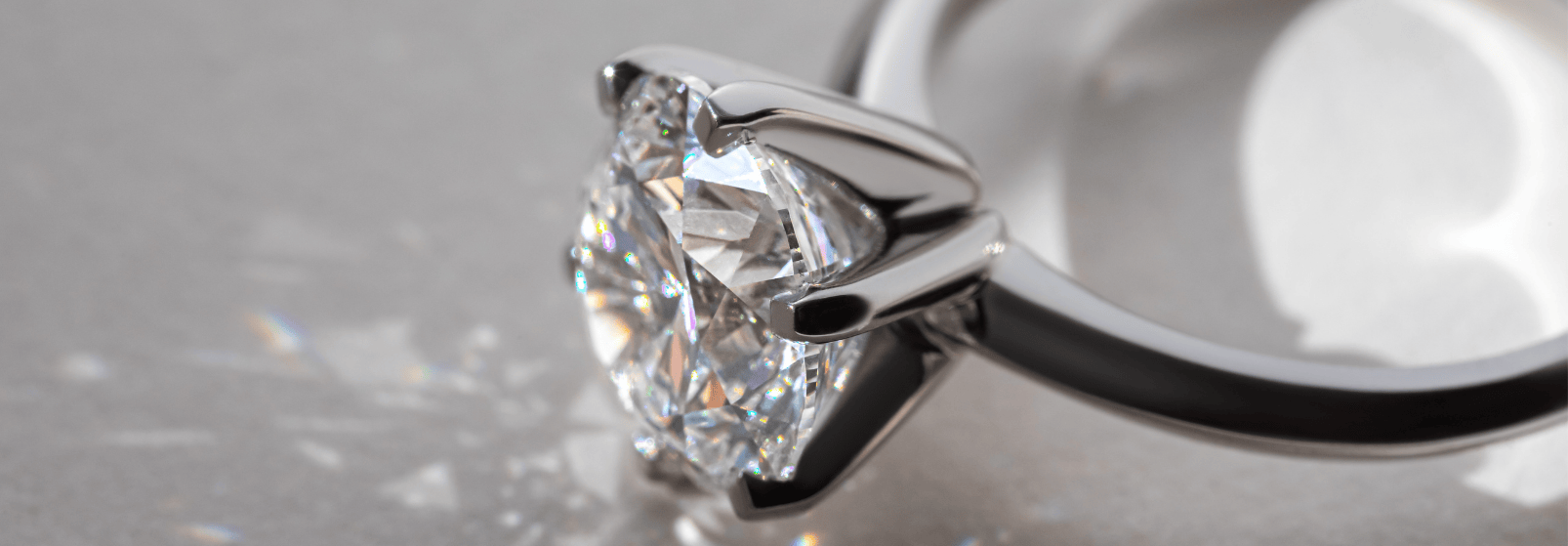
2 Feb 2026 — by Flawless Fine Jewellery — Reading time 12 minutes
The 4c’s – Diamond Cut
What Is Diamond Cut | Guide to Cut Grades & Quality
The 4c's - Diamond Cut
What You'll Learn
➤ Diamond cut, singular in its capacity to govern light refraction patterns, is the most critical of the 4Cs.
➤ Angles. Proportions. Down to fractions of a millimetre, sometimes less.
➤ Excellent to Poor (GIA), Ideal to Fair (IGI). Higher grades = more fire, more sparkle, more life.
➤ Round brilliant diamonds get graded on cut. Other shapes? Symmetry and polish. Different beasts entirely.
➤ A well-cut stone can visually outweigh a poorly cut one by carat, by colour, by almost everything else.
What Is A Diamond's Cut?
You're searching for a moment. A promise. Something that will sit on your hand and mean something.
You've scrolled through dozens of diamonds. Every listing mentions "diamond cut." But what does that mean? Some diamonds make you stop. Others leave you cold. That difference is what this is about.
Most people confuse diamond cut with shape. Round, oval, cushion, emerald (those are shapes). Cut is something else. It's the invisible craft. The difference between a stone that becomes your story and one that's just a purchase.
Cut is faceting, angles, proportions. A master cutter angles every facet so light moves through the stone exactly how it needs to. Centuries-old science. But the execution? That's pure magic. That's where a rough diamond becomes something that genuinely makes you feel alive.
This single quality matters more than everything else. More than carat, colour, clarity. You'll notice the moment your eyes land on it. Every time light hits the ring, you'll remember exactly why you chose this stone. Once you've experienced a truly exceptional cut, there's no going back.

Understanding Diamond Cut: The Foundation of Sparkle
Diamond cut isn't diamond shape. Yeah, I'm repeating myself. But this confusion is everywhere. Genuinely everywhere. And it costs people. Real emotional moments they actually deserved. Round, oval, cushion, emerald (those are just outlines. The shape). But cut? Cut is something else entirely. It's grade. It's precision. It's the measurement of how a skilled craftsman has basically freed the light that's been trapped inside a rough stone. Released it. Turned it into something that will catch your eye. Every single day. For decades. Something you won't be able to ignore, even if you tried.
Put two round diamonds side by side. Identical weight. Identical colour. Identical clarity. One's Excellent cut. One's Good cut. The difference will actually shock you. The Excellent cut stone radiates. It throws light everywhere. It comes alive in your hand. The Good cut diamond? It sits there. Flat. Dull. Like something essential is missing. Like a promise not quite kept.
This is the moment many buyers realise what they've been looking for. Not just a diamond, but a stone that feels like destiny.

The Gemological Institute of America (GIA) set the standard. Excellent down to Poor. Lab diamonds use IGI with Ideal at the top. Gemologists measure facet proportions with precision instruments. This isn't subjective. This is measurable.
Three things define what you actually see. Brilliance. The white light bouncing back. Fire. Those colour flashes that stop people mid-conversation when they see your hand. Scintillation. The sparkle moves with the stone, catching light like the diamond's got a heartbeat. That's what people feel.
A poorly cut diamond bleeds light. Haemorrhages it. Light escapes the sides, the base, anywhere except back to your eye. Wasted. An excellent cut diamond? It bounces that light internally, controls it, and maximises every photon's path back through the top. It's physics. The kind that makes people cry. The kind that transforms a moment into a memory.
How Light Dances Within a Diamond
Understanding why cut matters requires visualising light's journey. Not metaphorically. Actually visualising it.
Light enters the table (top flat facet). It travels down into the pavilion (the bottom half). Depending on the angles, it either bounces back or escapes. Light that bounces returns through the crown and exits via the table again, reaching your eye as white light with colour flashes mixed in.
Fractions of a second. But that fraction is everything.
Precise angles mean facets work as mirrors. Perfectly aligned mirrors bounce light efficiently back to your eye. Off by two degrees? Light leaks. It exits the sides instead of the top. You lose sparkle. You lose brightness. You lose the magic. You get a dull stone when you deserve radiance.
The difference between optimal and off-by-two-degrees is literally the difference between a diamond that makes you feel something and one that doesn't. That's not hyperbole. That's how sensitive this is. That's why cut matters more than anything else.

The Anatomy: What Makes a Diamond Brilliant
Eight facet types. Eight separate parts that must work in concert. View a diamond from above and you see the table mostly. But that's misleading. Balance across all eight components, that's what creates excellence.
The facets:
• Table – top surface, primary light entry point
• Bezel facets – positioned below table, redirect light downward through the stone
• Star facets – outline between bezel and table, contribute to sparkle configuration
• Upper girdle facets – control downward light movement
• Girdle – the widest section, boundary between crown and pavilion
• Pavilion facets – lower half, responsible for upward light reflection
• Lower girdle facets – sit above culet, guide reflected light trajectory
• Culet – the bottom tip; modern excellent cuts render it nearly invisible

A master cutter balances all eight simultaneously. One perfect facet means nothing if the others compromise. This is where science meets craft meets artistry. The cutter understands light refraction, diamond structure, angle mathematics. But they also possess the spatial reasoning, the motor control, the intuition and the respect for the stone that separates adequate work from extraordinary work.
They're not just cutting a diamond. They're releasing its soul. The Smithsonian Institution documents how cutting techniques evolved across centuries, yet modern technology enables precision that would have been impossible even fifty years ago. And still, the best cutters treat each stone like it's the one that will change someone's life.
Want to dig deeper? Our Diamond Guides actually walk through how cut sits alongside the other 4Cs. They work together, not in isolation. And if you're the type who wants the real technical stuff, the American Gem Society has published some genuinely solid research on how cut impacts light optically. It's dense, but worth reading if you're serious about understanding the science.
Cut Grades and What They Mean
A framework exists for comparing stones. But "framework" doesn't capture what these grades mean when you're actually looking at a diamond.
Excellent (GIA) or Ideal (IGI): Pinnacle territory. An excellent cut diamond reflects maximum light through table and crown with flawless polish and near-perfect symmetry, facets aligned to fractions of a millimetre. You get brilliant brightness, vivid fire, and constant sparkle. A triple excellent cut (excellent cut plus excellent symmetry plus excellent polish) represents the gold standard. This is what performing diamonds look like. This is what you deserve. The stone that will make you smile every time you catch your hand in sunlight. The one you won't be able to stop looking at.
Very Good (GIA) or Excellent (IGI): Still quality stones. They reflect nearly as much light as excellent cuts, though close inspection reveals differences. Angles are optimised well, just not optimally. Most buyers won't notice the gap, though excellent remains visibly superior.
Good (GIA) or Very Good (IGI): Light starts leaking noticeably. Sides and base leak photons instead of bouncing them upward. The stone appears less bright. Less sparkly. Slightly dull in certain lighting. The visual downgrade becomes obvious here.
Fair and Below: Significant optical compromises. Substantial light leakage. The diamond looks dull, dark-centred, sparkle-deficient. Fine jewellery almost never uses these grades.

Diamond Cut and Your Decision-Making Process
Balancing cut against the other factors is where first-time buyers often stumble. But here's the fundamental truth: cut determines whether your diamond performs. More than that, cut determines whether your diamond tells your story the way you deserve.
Why cut? Because it's the only 4C element you directly perceive and experience. Carat tells you weight. Colour and clarity matter to some buyers. But sparkle? Brilliance? Radiance? That's cut. That's magic. A well-cut H-colour diamond will visually dominate a poorly cut D-colour stone. Hands down. No contest. And years later, you'll be the person whose ring catches the light in a crowded room. You'll be the one people remember.
You don't ignore other qualities. You're strategic about allocation. Perhaps you choose H colour (slightly warm, eye-clean) with excellent cut rather than D colour (colourless) with good cut. The excellent cut wins the visual battle. That's where your eyes go. That's what makes you happy.

Here's where it gets complicated. Round brilliant cuts? They get formal cut grades from GIA and IGI. Everything else (oval, cushion, emerald cut, pear, marquise, radiant cut, princess cut, asscher cut) doesn't work that way. They're evaluated on symmetry and polish instead. Different system entirely. But don't let that confuse you. If you're looking at any of those fancy shapes, you still want Very Good or Excellent symmetry and polish. Minimum. Non-negotiable.
Each shape gives you something different, though. Round brilliant? Maximum sparkle. It's the obvious choice if you want a stone that throws light everywhere. But emerald cut diamonds and asscher cut diamonds, those are step cuts, quieter, more sophisticated. They show off the colour and clarity instead of the sparkle. Then you've got radiant cut diamonds, which kind of do both. They're the bridge. The compromise for people who want some flash but also want that elegant, understated vibe. And honestly, round, oval, cushion, pear-shaped diamond, marquise cut, and princess cut diamonds are what most people actually end up choosing. They're popular for a reason.
Here's something that surprises people. A well-cut stone can visually outsize a poorly cut one even when the carat weight is identical. Sounds impossible, but it's real. The sparkle, the light, the radiance, it all creates this visual expansion. A brilliant diamond just feels bigger. Feels more substantial. It commands the room. It feels like destiny. Like you made exactly the right choice.
When you're ready to actually pick your engagement ring, head to our Diamond Guides and use them to figure out how cut works with whatever shape you're drawn to. Because this isn't just a purchase. This isn't transactional. Finding your diamond is the beginning of a story. A story that's going to last you decades.
Key Takeaways
• Cut is the singular most important factor determining how your diamond looks and feels. You'll see it. Every. Single. Day. For the rest of your life, this stone will catch light and remind you of this moment.
• Light entry, internal travel, exit (cut controls all three stages). Precise angles create internal reflection. Reflection becomes sparkle. Sparkle becomes love.
• Target Excellent (GIA) or Ideal (IGI). Very Good is minimum acceptable. The visual gap is undeniable. Why settle for less than the diamond you deserve?
• Cut and shape are separate considerations. Round brilliants get cut grades. Other shapes get symmetry/polish grades. Both matter. Both should reflect your vision.
• A well-cut diamond outperforms a heavier, higher-clarity poorly cut stone. Optical performance wins every time. Beauty wins. Emotion wins.
• This knowledge? It actually empowers you. You can walk into this decision knowing exactly what matters. You'll select a diamond you'll genuinely love for decades. A stone that feels like it was always supposed to be yours. Like it found you.
FAQ's
What separates diamond cut from diamond shape?
Cut describes faceting quality, proportions, and craftsmanship grade. Shape describes the outline (round, oval, cushion, pear, etc.). A round diamond can be poorly cut. A cushion diamond can be excellently cut. Related concepts, different dimensions entirely.
Why does diamond cut rank first among the 4Cs?
Visual impact. Real-world appearance. Light entry, refraction, exit patterns all depend on cut. A well-cut diamond appears brighter, livelier, more radiant than a larger poorly cut stone. Optical physics determines visual hierarchy.
Do Excellent cut diamonds always command premium prices?
Usually, yeah. Excellent cuts will cost you more than Good or Fair cuts. That's just how it works. But here's the thing savvy buyers know. You can adjust elsewhere. Lower the colour grade slightly. Reduce the carat weight a bit. Keep your budget intact whilst still getting the excellent cut you actually need. Because the visual payoff? It ends up costing less than you'd think. The impact is worth way more than the price difference.

Which diamond shape produces maximum sparkle?
Round brilliant diamonds. Full stop. Cut them to Excellent or Ideal and they sparkle more aggressively than anything else. The 58-facet design is basically optimised for light return. Radiant and cushion shapes also sparkle beautifully. Don't get me wrong. But they're not quite at the same level. Then you've got emerald and Asscher cuts (those are step cuts), and they're totally different animals. Softer. More controlled. Sophisticated, even. Less flash, more class.
Is a diamond's cut improvable post-purchase?
No. Flat out, no. Cut is permanent. There's no fixing it later. If you wanted to improve it, you'd have to re-cut the entire diamond. And that removes material. Reduces the weight. Basically destroys what you paid for. So this decision? It's not something you can reconsider down the line. Get the cut right from the start. This is non-negotiable.
Which grading laboratory (GIA or IGI) is more trustworthy for cut assessment?
Both maintain high standards. GIA dominates natural diamond grading. IGI specialises in lab-grown diamonds. An Excellent GIA cut and an Ideal IGI cut perform comparably in real life. Independent, recognised certification matters most.
Can you visually detect cut quality differences?
Absolutely. Immediately. Side-by-side comparison reveals brightness, liveliness, balance variations. Cut grade translates directly to optical performance. You'll see it. No doubt.




Need help choosing ?
We're happy to help