11 Feb 2026 — by Flawless Fine Jewellery — Reading time 12 minutes
Rare diamond cut guide
This guide explores rare diamond cuts and helps you choose beauty beyond the ordinary.
Rare diamond cut guide
The most popular cut of diamond currently is the round Brilliant, accounting for approximately 75% of engagement rings. This is followed closely by the elongated Oval, romantic Cushion and elegant Emerald cuts. These cuts make up most of what you see in jewelry stores. They’re appealing, accessible and generally maximise sparkle.
But there do exist a few rarer cuts. If one looks around a little, you’ll find there’s a secret world of exquisite shapes and facets, not commonly found in stores. Some of these arent even manufactured anymore. Here’s a list of five we’ve assembled for you.
Rose cut
The rose cut diamond was born in the 1500’s. Inspired by the triangular shape a Roses furling petals create. This cut is more simple compared to modern cuts, bearing some similarity to the romantic cushion.

Long before steam engines and electricity, times were simpler and light came from softer sources like candle light or whale oil lamps. The domed top of the rose cut was designed to catch this softer light, and gives the diamond a soft glow, similar to the blush of rose petals. The simple triangular facets of the rose cut also make the diamond look much larger per carat than brilliant or step cut diamonds. The average brilliant cut diamond has 57 to 58 facets, while the Rose cut usually has 12 to 24. This means the Rose cut doesn’t glitter as intensely when turned in the light like most engagement rings, it blooms. Less facets, larger faces, a statement.
Old mine cut
In the late Georgian and early Victorian era, the old mine cut was the probably the most popular style for engagement rings. These diamonds were painstakingly cut by hand using a grinding wheel making each diamond unique in its shape and sparkle. The faceting was done by eye, craftsmen would use a loop to periodically check on the progress of the cut. Old mine cuts are far from the symmetry achieved by modern machinery and computers, but the asymmetry is a part of its antique appeal.
In the late Georgian and early Victorian era, the old mine cut was the probably the most popular style for engagement rings. These diamonds were painstakingly cut by hand using a grinding wheel making each diamond unique in its shape and sparkle. The faceting was done by eye, craftsmen would use a loop to periodically check on the progress of the cut. Old mine cuts are far from the
symmetry achieved by modern machinery and computers, but the asymmetry is a part of its antique appeal.

While Old mines helped pave the way for the modern Brilliant cut, they’re rarely chosen for engagement rings these days. A notable exception was Taylor Swift’s engagement ring. In 2025 Travis Kelce proposed to Swift with a beautiful 10-carat elongated cushion, cut in the Old mine style.

Old european cut
In the 1800’s diamonds were often cut in such a way as to retain the most weight, rather than achieve the highest clarity, which means trying to cut the diamond down to its clearest sections.

To prevent losing too much weight, gem cutters would follow the diamond’s natural shape. This would result in a higher crown and deeper pavilion, with a smaller table. This type of cut doesn’t create as much sparkle as the brilliant cut because of how light interacts with the facets. Modern brilliant stones are cut to increase white light reflection. Old European cuts, coming from a time with no modern lighting, were cut with larger facets that increased coloured light reflection, or fire.

When we talk about fire we are referring to the stones dispersion. Dispersion is the separation of white light into the colours of the rainbow, so the higher the internal angle of the stone’s facets, the more dispersion we see and thus the more fire.

Portuguese cut
The exact origins of the Portuguese cut remain a mystery. It is thought to have originated in colonial Portugal during the late 1800s, when diamonds from mines in Brazil were flooding Europe. This cut is highly faceted and symmetrical. On average it has 161 facets, triple the usual count found in the classic brilliant cut round diamonds.

To cut a ring with so many facets is a masterful endeavour. Facets act similar to a light prism, splitting and reflecting the light. The more facets, the more brilliance and fire. The Portuguese cut becomes a dazzling mosaic of light. Because of the high face count, a larger stone of at least two or more carats is required to show off its full optical performance. Small stones just wont cut it.

Look at the beautiful geometric patterns being created by the lower facets interacting with the crown. It looks like a beautiful mosaic or a grand stained glass window from a monastery in old Lusitania. The unique Portugal cut is an eye catcher and a statement not just because of rarity but because of its precise symmetry. They say one of the main aspects of finding something beautiful is due to the human brain's love of symmetry.
Lozenge cut
The lozenge cut sets itself apart from the other Shapes on this list with its elongated and sharp form, originally developed in the late 1800s, it rose to popularity in the art deco craze of the 1920’s. The designs of this era featured bold geometric form, parallel lines and symmetry.

You can see why the Lozenge cut was a favourite of the roaring twenties. Four equal sides, step cut with a pointed culet creates that ‘endless hall of mirrors’ effect.
The table is the largest facet on a diamond, located directly on top, it acts as the main window for light to enter and exit. Thanks to their large table, lozenge cuts show alot of colour, making up for their lower sparkle. However, those looking for a unique look should not pass this stone by.

Moval cut
The Moval cut Diamond Moval is one of those stones that seem new but isn’t actually. Finding its origins in the early 1900’s and the art deco period. It is a highly specialised cut, not to be found in your average jeweler. Moval cut combines the elongated form of the Marquise diamond with the elegance of the Oval.

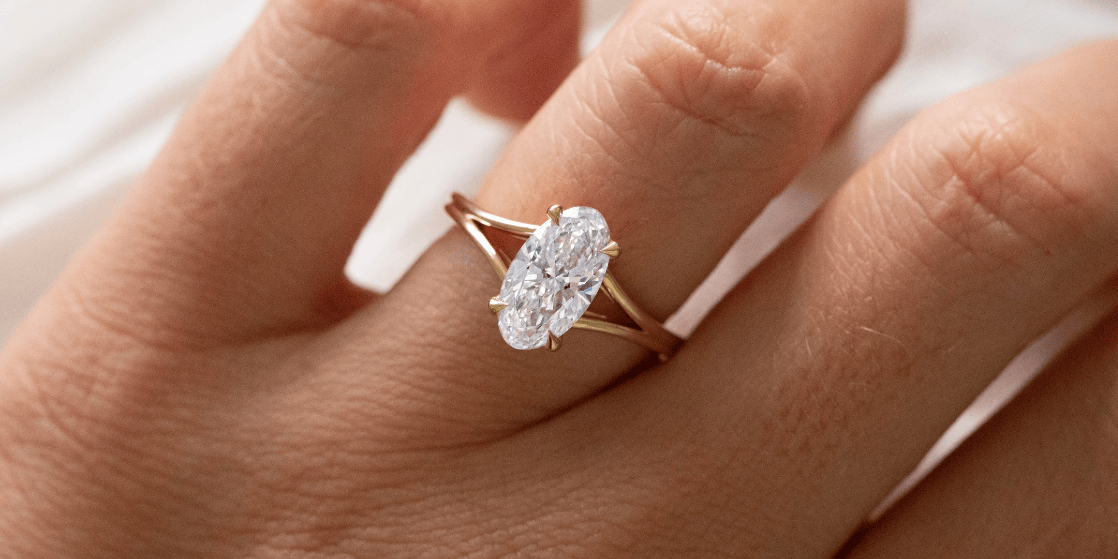
The long slender form of the moval cut is quite flattering to the wearers hand, making the fingers appear as if they are longer and more slender. The oval cut alone is very popular, however, sometimes they can feel a bit chunky when set in the wrong style of ring. By combining the rounded ends of the oval with the slenderness of the Marquise, the result is a much finer gem.

Diamond jewelry trends come in cycles. From the widely accepted all the way to the avant garde. Part of the rarity of some of these diamond cuts is that they’re not even produced anymore, like the old mine and the old european cuts, they’re antiques. Eventually, even the old styles come back into vogue, as we’ve seen over the past couple years, and will likely continue to see through the rest of 2026.




Need help choosing ?
We're happy to help